Winter is hard on garage doors anywhere in New England, and the South Shore adds its own twist: wet nor'easters, freeze-thaw cycles that come and go all winter, and damp air off the coast. A little prep in the fall and some care after each storm prevents a lot of the calls we hear about in January.
Before the first hard freeze
- Watch it run. Stand inside and watch the door open and close. It should move smoothly without jerking, scraping or loud banging.
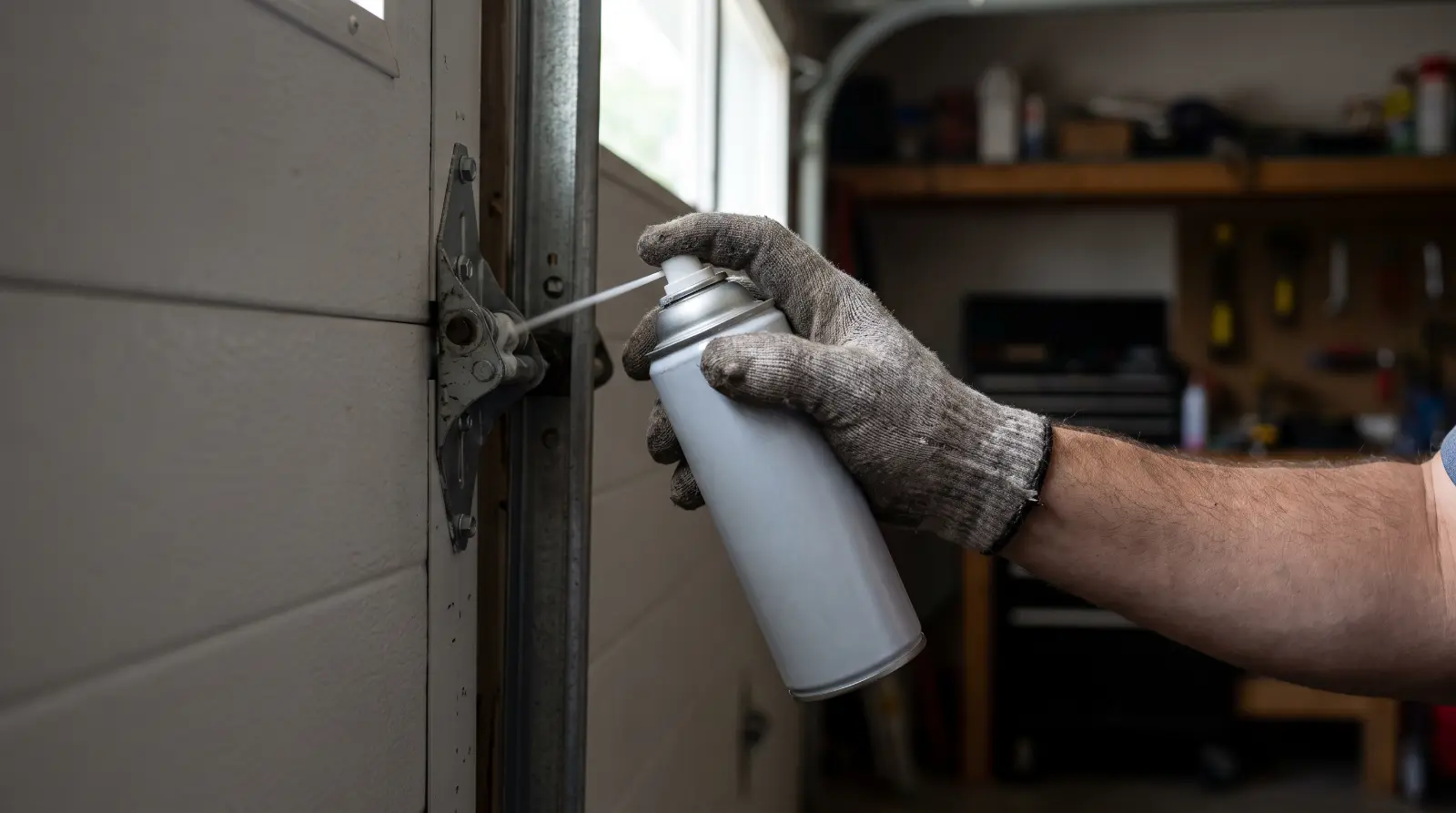
- Lubricate the moving parts. Use a garage door lubricant or white lithium grease on the hinges, the roller bearings (not nylon wheels) and a light coat on the springs. Don't grease the inside of the tracks; that collects grit.
- Check the bottom seal. If the rubber is cracked, flattened or torn, ask about replacing it before winter. A bad seal lets in water that refreezes under the door.
- Test the safety reversal. Lay a roll of paper towels flat under the door and close it. It should touch and reverse. If not, have the opener checked.
- Look at the springs and cables, don't touch. Rust, a gap in a spring coil, or frayed strands on a cable are worth a call before the cold makes them fail.
During a nor'easter
- Keep the door closed in high wind. Wide doors can flex in strong gusts.
- Shovel or blow snow away from the door line before it packs down and freezes.
- If the power flickers, check the GFCI outlet in the garage afterwards and reset it if needed.
- Know how to use the red release cord, and use it only with the door fully closed.
If the door is frozen to the floor
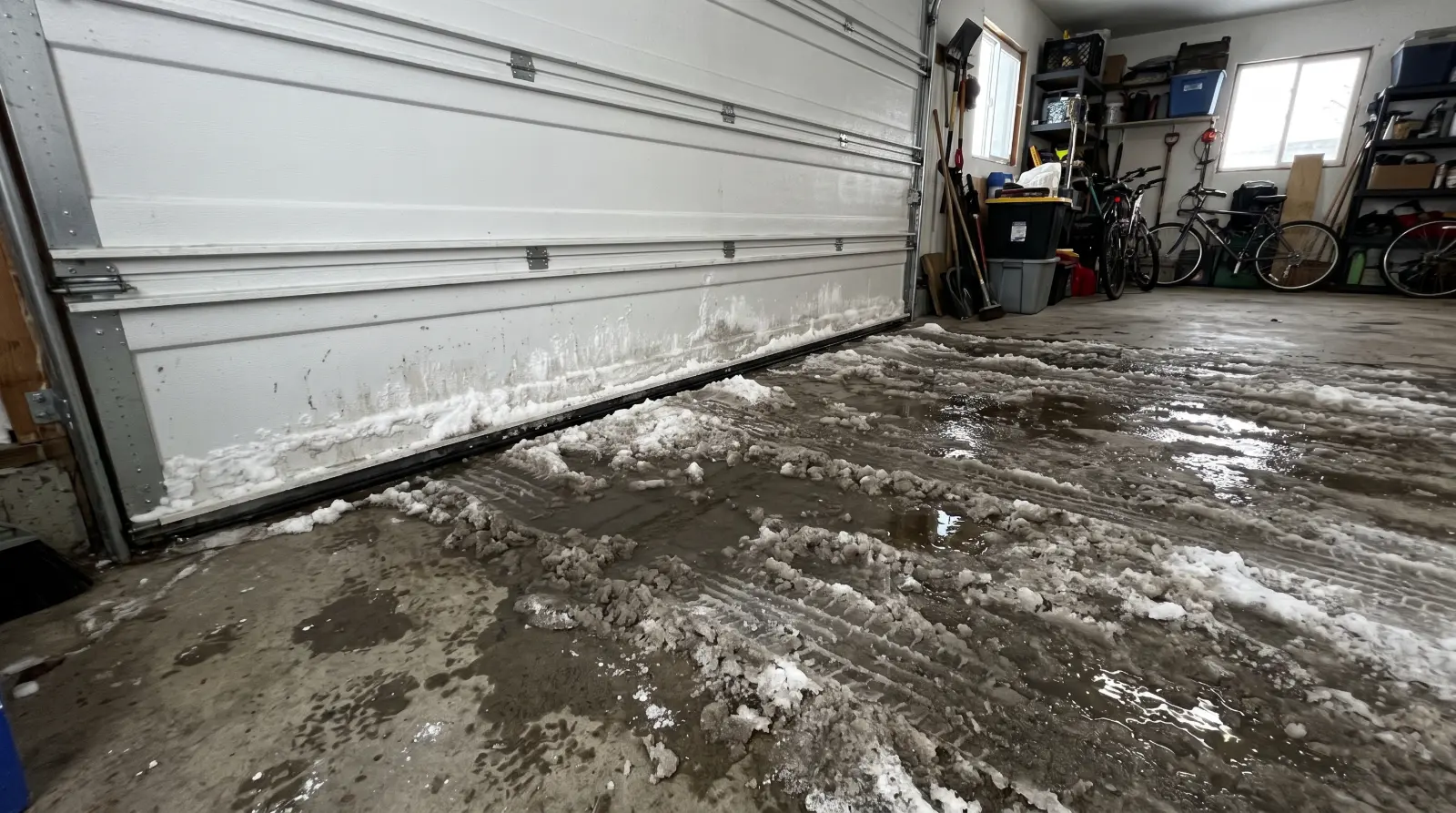
This is the most common winter call that isn't a broken part. Snowmelt runs under the bottom seal, then freezes overnight.
- Stop pressing the button. The opener will strain against the ice and can strip its gear or pull a cable off the drum.
- Unplug the opener so nobody else tries it.
- Free the seal with a plastic scraper, a hair dryer or heat gun on its lowest setting held well back, or a little calcium chloride ice melt along the seam. Don't use a metal shovel, an axe or an ice pick on the rubber.
- Try again once the whole width is loose. If it still won't move, or it moves crooked, call.
To prevent it, clear slush from the door line before nightfall, and ask about a better bottom seal if it keeps happening. If the door won't open even after the ice is gone, read garage door won't open or close.
After the storm: salt and rust
Road salt rides in on tires and drips onto the floor right where the door's bottom section, brackets and cables live. A few times a winter, on a mild day, hose or wipe down the bottom of the door and the floor along the door line, and let it dry with the door partly open if the weather allows. Rust caught early is a lot easier to deal with than a cable that snaps at a rusted bracket.
Damp air and detached garages
Unheated detached garages swing between freezing and thawing all winter, and the damp air doesn't leave. That's hard on steel springs and hinges and on wood doors. Keeping the moving parts lubricated and the bottom seal in good shape is the best defense. For an attached garage, an insulated door also helps. See new garage doors.
Questions people ask
What should I use to lubricate my garage door?
A garage door lubricant or white lithium grease on hinges, rollers with steel bearings, and the springs. Avoid plain WD-40 as a lubricant; it's a cleaner and doesn't last. Don't grease the tracks themselves.
Should I use ice melt in front of my garage door?
Use it sparingly and keep it off the rubber seal where you can. Salt-based melts speed up rust on the bottom section and brackets. Clearing snow from the door line before it freezes works better.
Why does my door reverse only on cold mornings?
Cold stiffens grease and rubber, so the opener needs more force to move the door, and it can mistake that for an obstruction. Lubricating the moving parts usually helps. If not, have a technician check the force settings.