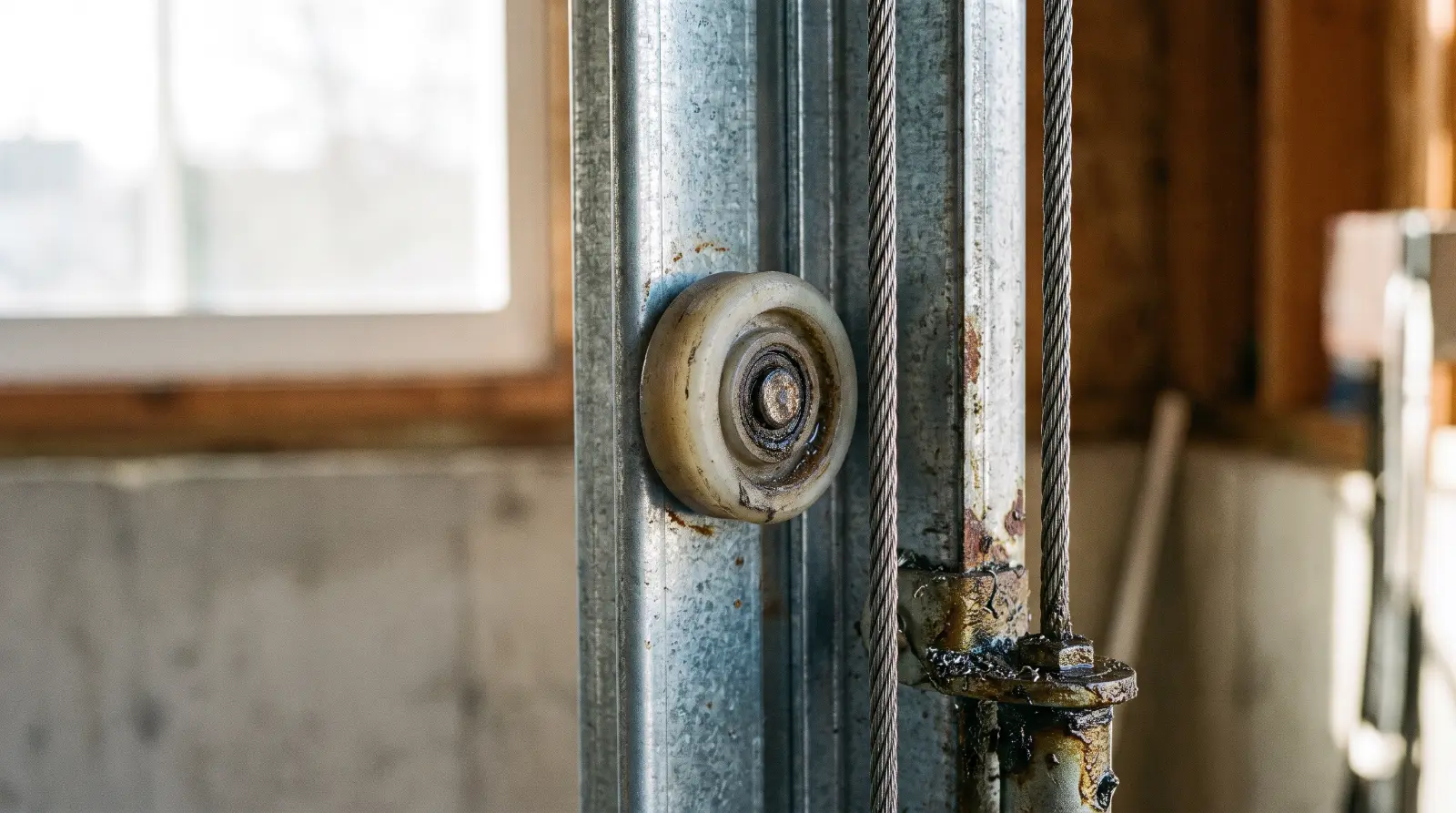
A crooked door or a loose cable means stop. The cables carry the door's weight along with the springs. Don't run the opener, don't lift the door, and keep people and cars out from under it.
Lift cables, drums, rollers and tracks are the parts that guide the door and carry its weight with the springs. When one fails, the door usually tells you right away: it hangs crooked, rubs or scrapes, jerks, or stops part way. These repairs are fairly quick for a technician with the right tools, and risky for anyone without them.
Signs of a cable, roller or track problem
- One side higher than the otherA cable slipped off its drum or broke. Classic after a spring snaps.
- A cable hanging looseLook at the bottom corners of the door and at the drums at the top. A slack cable is a stop-now sign.
- Grinding or scrapingWorn or broken rollers, or a roller rubbing a bent section of track.
- A jerky, shaky rideRollers with worn bearings, loose track brackets, or a track that's out of line.
- A roller out of the trackOften after a car or snowblower bumps the track. The door can bind and come off.
Why cables and brackets fail here
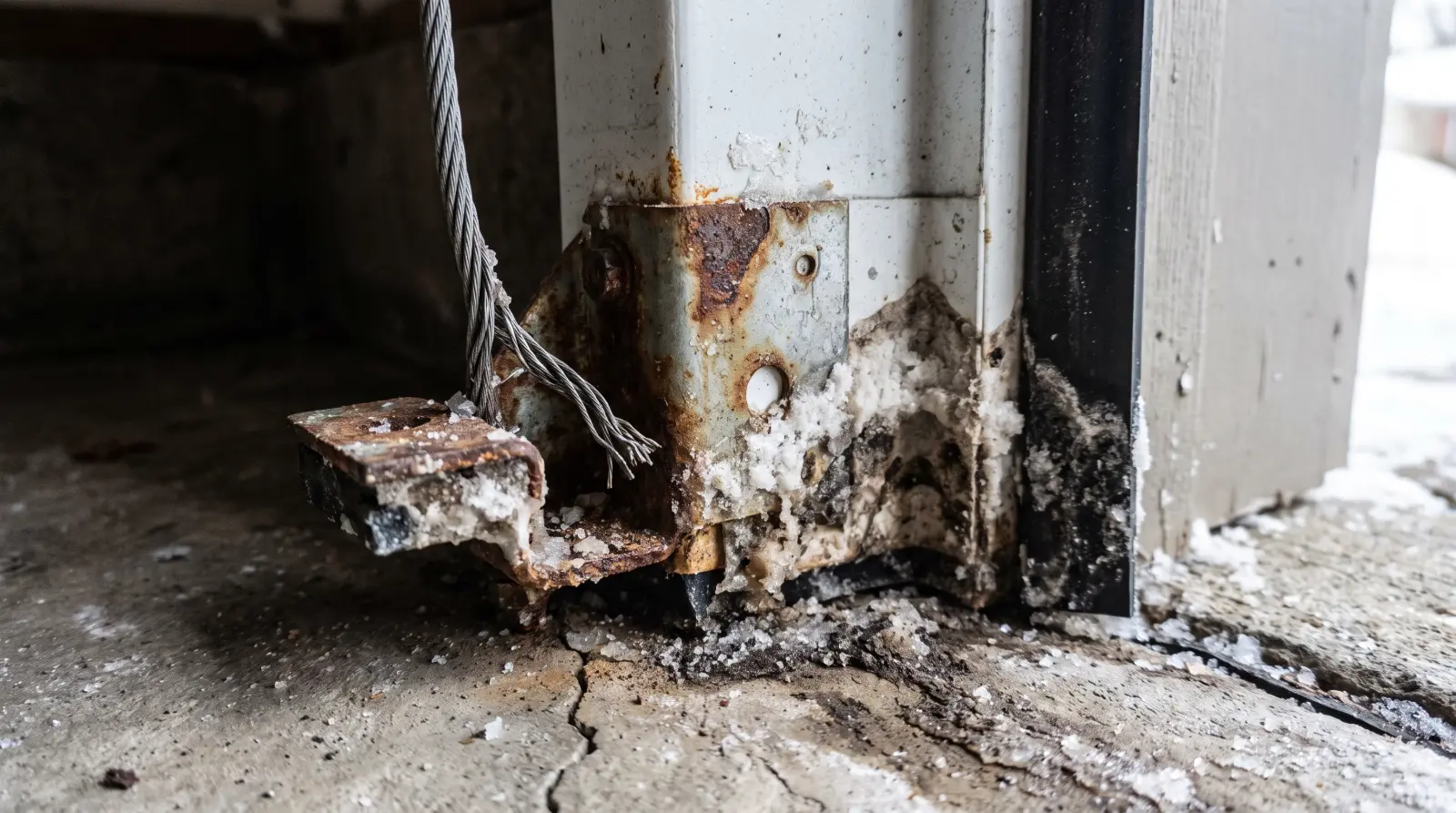
The bottom of a garage door takes the worst of New England weather. Slush and road salt drip off cars and pool right where the bottom brackets and cable ends sit. Add damp coastal air and a garage that never fully dries out between storms, and the steel at the bottom corners corrodes. Over a few winters, a cable can fray at the bracket, or the bracket itself can rust thin. Many Brockton-area doors also have their original cables, which simply wear out.
Rollers and tracks
Older doors often have bare steel rollers that wear out, get noisy and eventually crack. Nylon rollers with sealed bearings run quieter and longer. Tracks bend when they get bumped, which happens a lot in tight single-car garages where there's not much room beside the car. A small dent can make the door bind; a bigger one can let a roller pop out.
It's fine to wipe the tracks clean and pick out leaves or debris. Don't hammer a track back into shape and don't loosen the brackets that hold it. Track alignment is tied to the spring tension and the cables.
Safety cables on extension springs
If your door has extension springs (the long springs along the side tracks near the ceiling), look for a thin cable running through the middle of each spring, tied off at both ends. That's a safety cable, and it keeps a broken spring from flying across the garage. Many older Brockton-area garages don't have them. They're small parts and quick to add during any cable or spring visit, so ask about them. Don't confuse them with the lift cables, which run down to the bottom corners of the door and carry its weight.
What usually happens on the visit
- The technician secures the door and takes the tension off the springs if needed.
- Damaged cables are replaced (usually both sides together, since they're the same age).
- Rusted bottom brackets, worn rollers or bent track sections are swapped out.
- The door is rehung, the cables are wound evenly on the drums, and the door is balance-tested.
How long it takes: most cable and roller jobs are done in one visit. A door that came all the way off its track takes longer, and sometimes needs a spring replaced too. Cable problems often follow a broken spring, so expect the technician to check both.
Questions to ask
- Will you replace both cables, or only the broken one?
- Are the bottom brackets rusted enough to replace too?
- Do you recommend nylon rollers for my door?
- Is the track bent, or just out of line?
Questions people ask
Why is my garage door hanging crooked?
Usually one lift cable came off its drum or snapped, so one side of the door is held up and the other isn't. Stop using the door and call. Don't try to rewind the cable yourself; it's attached to the spring system.
Can I put a roller back in the track myself?
We'd leave it. A roller jumps the track for a reason, often a bent track or a slack cable, and forcing the door can make it worse or bring it down.
Why do the cables rust at the bottom?
The bottom brackets and cable ends sit right where snowmelt and road salt collect. Over a few winters, salt and moisture corrode the bracket and fray the cable where it attaches.