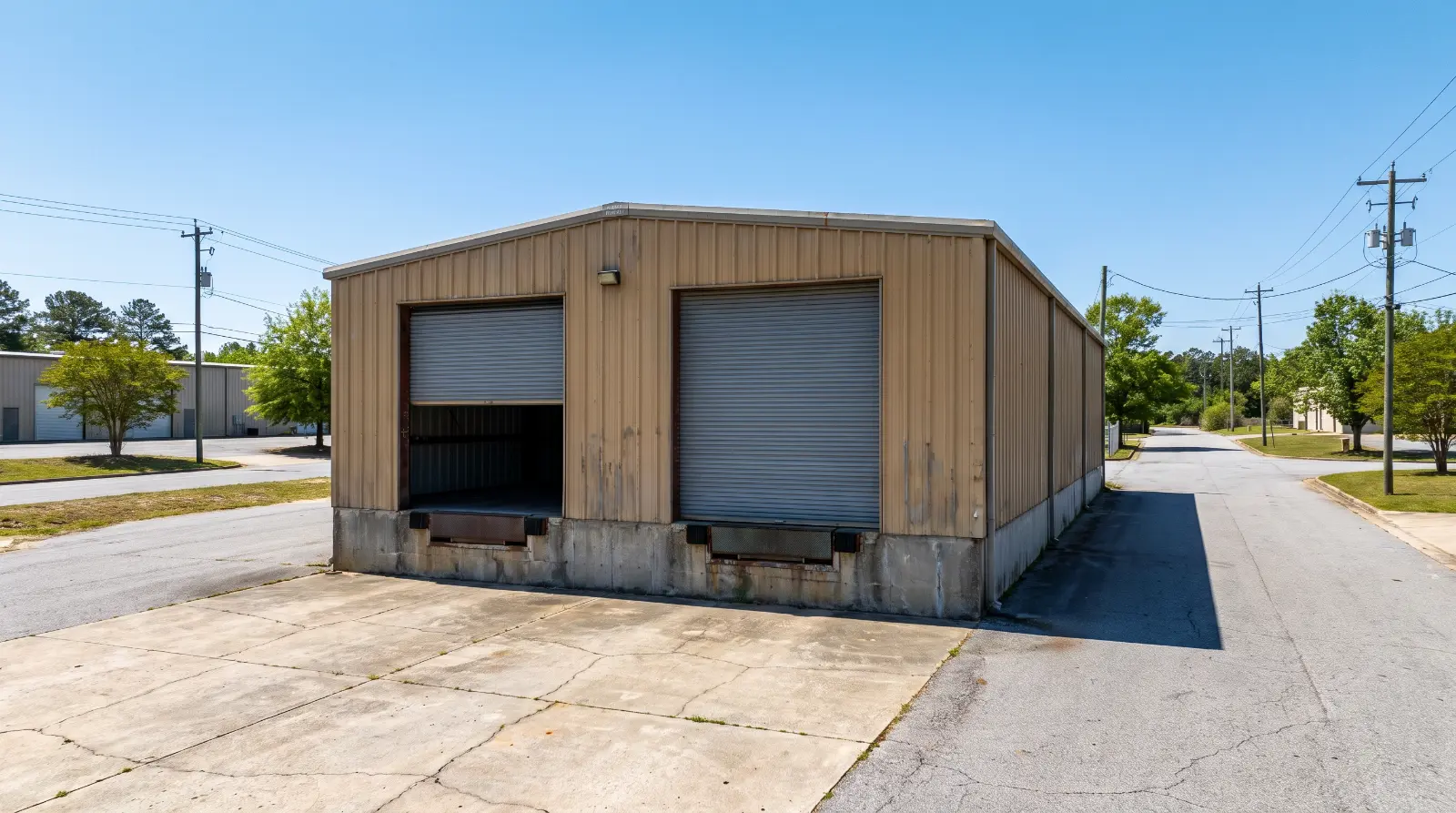
Brockton has a long industrial history, and the city and its neighbors still have plenty of working buildings: older brick factory and mill buildings converted to new uses, warehouses and light industrial parks off the main routes, auto shops, contractors' yards, storage buildings and retail with loading areas. Commercial doors in those buildings take far more cycles than a home garage door, and when one fails, it can stop the day's work.
Common commercial door types
Rolling steel doors
Steel slats that coil around a drum above the opening. Common on warehouses, storage units and service bays. They're tough, but the springs inside the barrel, the guides and the motor all wear with use.
Commercial sectional doors
Like a heavier home garage door, often with high-cycle springs, thicker sections and higher-lift tracks. Common on auto shops and service bays.
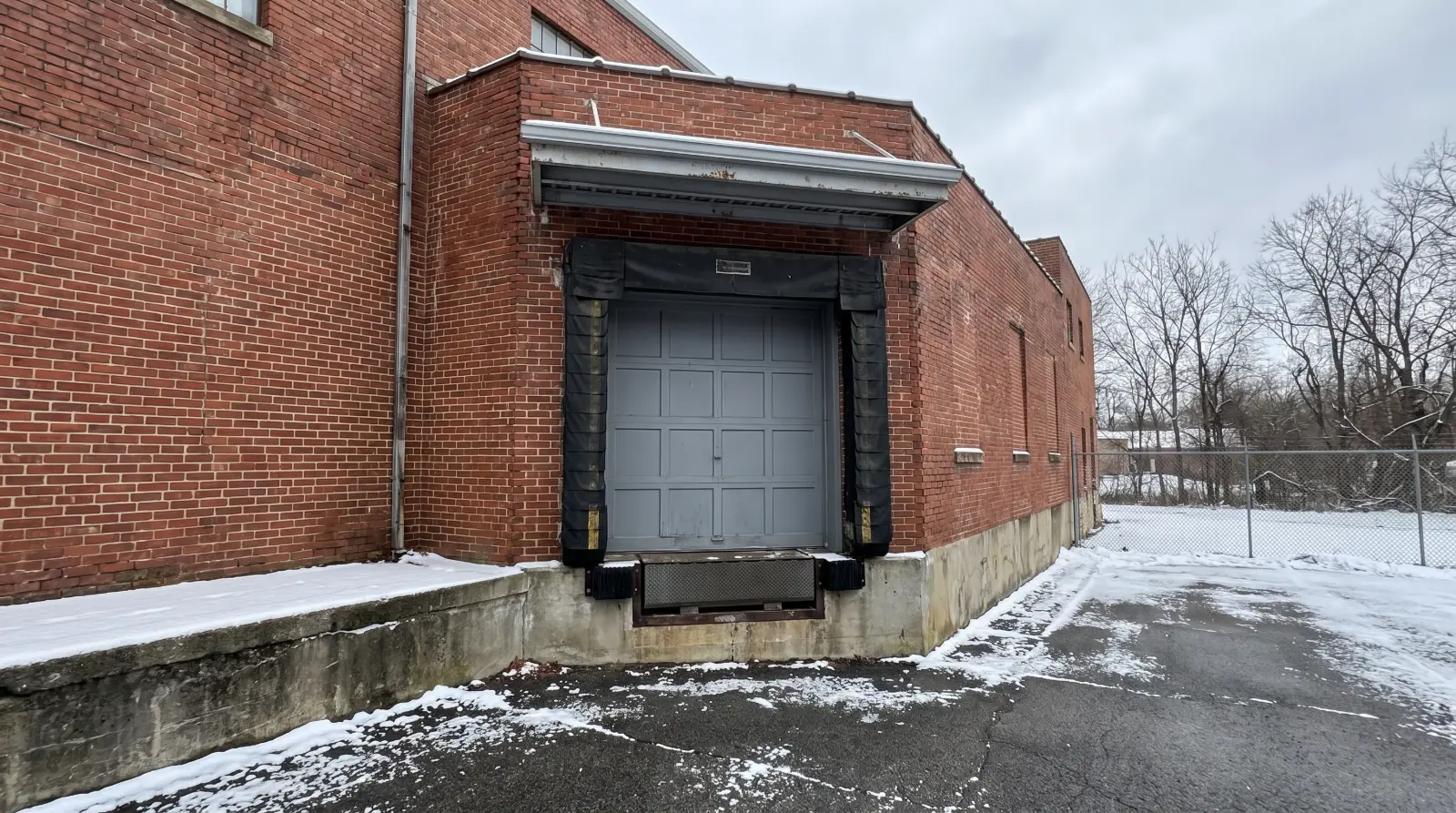
Loading dock doors and seals
Dock doors take hits from forklifts and trailers, and dock seals and shelters wear out with weather. A damaged seal lets in cold, rain and snow.
Signs a commercial door needs attention
- The door is slow, jerky, or stops partway
- Loud banging or grinding from the barrel, guides or motor
- Visible damage to slats, sections or guides after an impact
- The door drifts down or won't stay open
- Safety edges or photo eyes that don't stop the door
- Gaps around a dock seal letting weather in
Winter and commercial doors
High-traffic doors that open and close all day in freezing weather wear springs quickly, and salt and slush from trucks and vehicles build up at the bottom. Ice at the threshold can stop a door from closing and leave a building open overnight. Having springs, cables and bottom bars looked at in the fall is a lot easier than a breakdown in February. Our winter prep guide covers the basics, most of which apply to commercial doors too.
Older buildings, odd openings
Many of the brick factory and mill buildings around Brockton were built long before today's door sizes, and their openings have been cut, patched and re-framed over the decades. Doors in these buildings are often custom sizes, mounted on old masonry, and run by operators that have been replaced piecemeal. When a door like that fails, the fix may need custom parts, so a clear description and a few photos on the first call save time.
Safety around doors staff use every day
Commercial doors are heavy and they move fast. Photo eyes and safety edges should stop and reverse a closing door, and a door that drifts down or won't hold position should be taken out of use until it's checked. If a forklift or truck has hit a door or its guides, treat it as damaged even if it still runs: bent guides and a strained barrel can fail all at once. Keep people from walking under a door that's misbehaving, and lock out the operator if you can.
Before you call
- What type of door it is and roughly its size
- Whether it's manual (chain hoist) or motor operated
- Exactly what it's doing, and whether it's stuck open or closed
- Any make or model plate on the motor or the door
- Access details: hours, who will be on site, where to park
Questions to ask
- Do you work on this type of commercial door regularly?
- Can you secure the building today if the door can't be fully repaired on the first visit?
- Do you offer scheduled maintenance for high-use doors?
- Can you send your insurance details before coming on site?
For a home garage, see door won't open or close or broken springs.
Questions people ask
Do you cover commercial garage doors in Brockton?
Yes. Calls about commercial doors are routed the same way, to independent companies that work on commercial doors in the area. Mention the door type and size when you call.
What information helps for a commercial door call?
The door type (rolling steel, sectional or dock door), roughly how big it is, whether it's manual or motor operated, what it's doing, and whether the building is open or the door is stuck open.