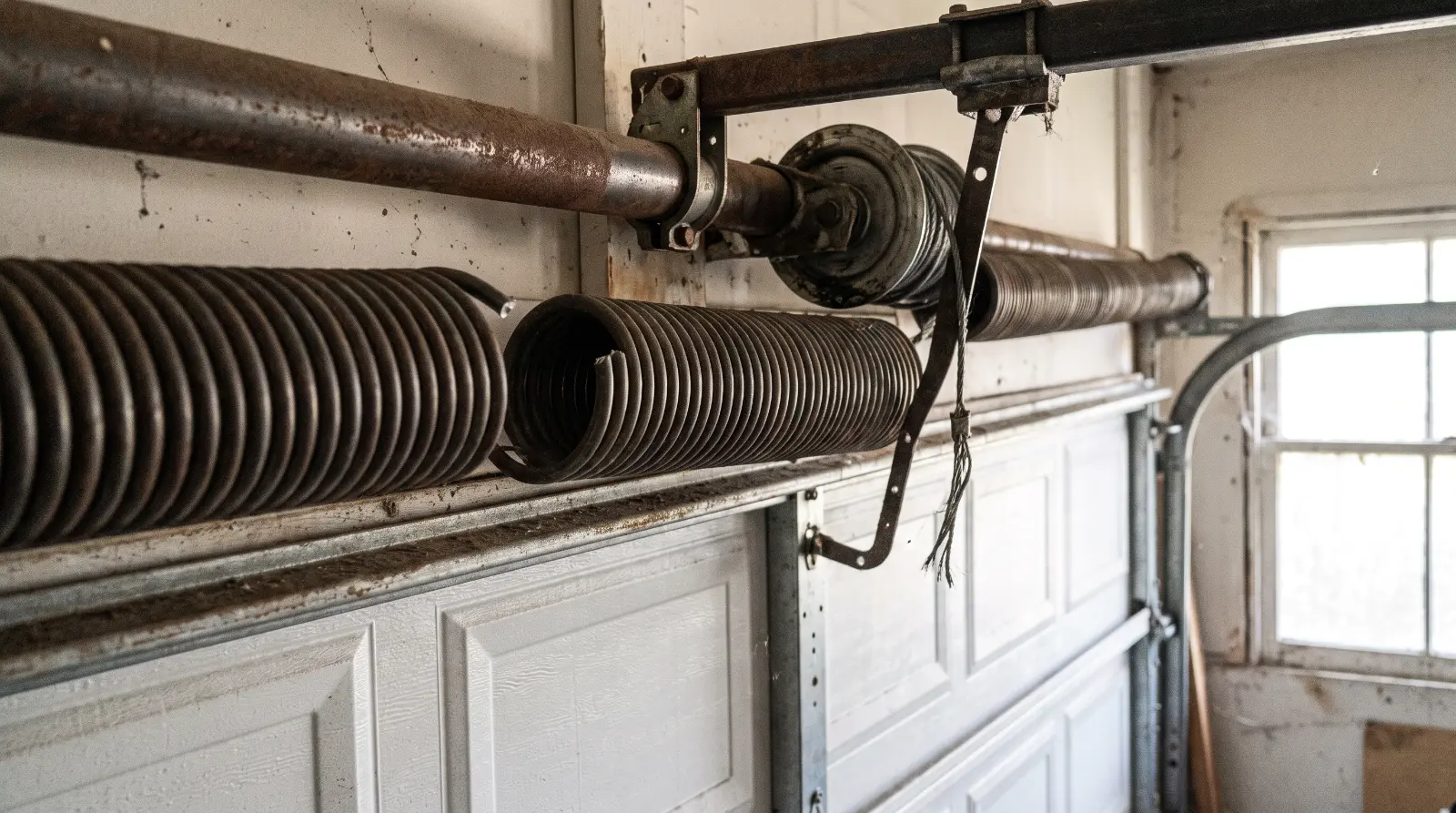
Stop here first. Don't keep pressing the opener, don't lift the door by hand, and don't pull the red release cord while the door is up. The spring was carrying most of the door's weight. Without it, the door can drop. Unplug the opener and keep kids and pets clear.
If you heard something like a gunshot from the garage and now the door barely moves, a spring almost certainly broke. It's the repair Brockton homeowners call about more than any other, and it tends to happen on the coldest mornings of the year. This page explains how to confirm it from a safe distance, what the two kinds of springs look like, why they fail here, and what to ask before a technician comes out.
Five signs it's the spring
- A loud bang, no door movementOften heard at night or on the first cold morning of the season, sometimes with nobody near the door.
- The door feels like it weighs a tonA balanced door lifts easily with one hand. With a broken spring it feels nailed down.
- Opener strains, lifts a few inches, stopsMany openers sense the extra weight and quit, or reverse, to protect themselves.
- A gap in the coil above the doorLook, don't touch. A broken torsion spring shows a clear split, usually an inch or two wide.
- The door rises crooked or slams downOne side of a two-spring setup failed, or a cable went slack when the spring let go.
Torsion or extension: which do you have?
Torsion springs sit on a steel bar that runs across the top of the door opening. As the door closes, the spring winds up and stores energy. As it opens, the spring unwinds and does most of the lifting. Most doors installed in the last few decades use torsion springs. When one breaks, you'll usually see the gap in the coil from the floor.
Extension springs run along the horizontal tracks on both sides of the door, up near the ceiling, and stretch as the door closes. Plenty of older capes and ranches around Brockton still have them, especially on detached single-car garages. When an extension spring breaks, it can fly across the garage unless a safety cable runs through the middle of it. If yours don't have safety cables, ask the technician to add them.
It's worth knowing which kind you have before you call, because it's one of the first things the company will ask. If you're not sure, a phone photo of the top of the door taken from the floor is plenty.
Why springs break more often around Brockton
Cold snaps
A spring does its work by twisting or stretching thousands of times. Every cycle leaves a tiny bit of fatigue in the steel. Cold makes the steel less forgiving, so a spring that's near the end of its life often gives out on the first hard freeze, or the morning after a nor'easter when the door is also fighting ice at the bottom.
Salt and damp air
Road salt tracked in on tires, plus the damp air that rolls in from the coast, puts a film of rust on springs over time. Rust adds friction between the coils and speeds up wear. Detached garages with no heat and no insulation see the biggest swings in temperature and moisture.
How often the door is used
Where the garage is the main way into the house, the door can easily run five or more cycles a day. Standard springs are commonly rated for roughly 10,000 cycles. Do the math and a busy household can wear through a set in a handful of years.
A door that's out of balance
If a previous repair used the wrong size spring, or the door picked up weight over the years (new panels, layers of paint, a heavy wood door), the springs work harder than they were meant to. A good technician weighs or measures the door and matches the springs to it.
Why this isn't a do-it-yourself job
Online videos make spring swaps look routine. The people in those videos have the right winding bars, the right replacement springs, and a lot of practice. A torsion spring holds enough stored energy to break a hand or a jaw if a bar slips, and a loose extension spring can do real damage to a car or a person. It's the one garage door repair we tell everyone to leave alone, even people who are handy with everything else in the house. Our before-you-call checklist covers the things that are safe to look at yourself.
One spring or both?
If your door has two torsion springs, or two extension springs, they went in at the same time and have done exactly the same number of cycles. When one breaks, the other is usually close behind. Many technicians replace both on the same visit so you don't end up with a second breakdown a few months later. Some doors are fine with one. Ask what they recommend and why, and decide from there.
What usually happens on the visit
- Safety first. The technician secures the door so it can't drop, and unplugs the opener.
- Measure. They measure the old spring (wire size, inside diameter, length and wind) or weigh the door to pick the right replacement.
- Swap. The old spring comes off, the new one goes on and is wound or hooked up to the right tension.
- Check the rest. Cables, drums, bottom brackets and rollers get a look, since a spring break often frays a cable or knocks one loose.
- Balance test. With the opener disconnected, the door should stay put about halfway up. Then the opener is reconnected and its force and reversal settings are checked.
How long it takes: a straightforward spring replacement is usually a single visit, often an hour or two once the technician is at the door. It takes longer if a cable also needs replacing or the door came off its track. If the company needs to order an unusual spring size, it can mean a second trip, which is why it helps to describe the door well on the phone.
Questions to ask about spring work
- Will you match the new spring to my door's weight and height?
- Do you recommend replacing both springs, or just the broken one? Why?
- Will you check the cables, drums and rollers while you're there?
- Do you carry common spring sizes on the truck?
- Are higher-cycle springs an option for a door we use a lot?
- What warranty comes with the new springs and the labor?
If your car is stuck inside
This is the part that makes a broken spring stressful: the car's in the garage and you need it. Don't use the opener to force the door, and don't try to prop it open with a ladder or a piece of wood. Tell the company on the phone that the car is inside, and ask how soon they can come. Then call (774) 542-DOOR and let them plan around it.
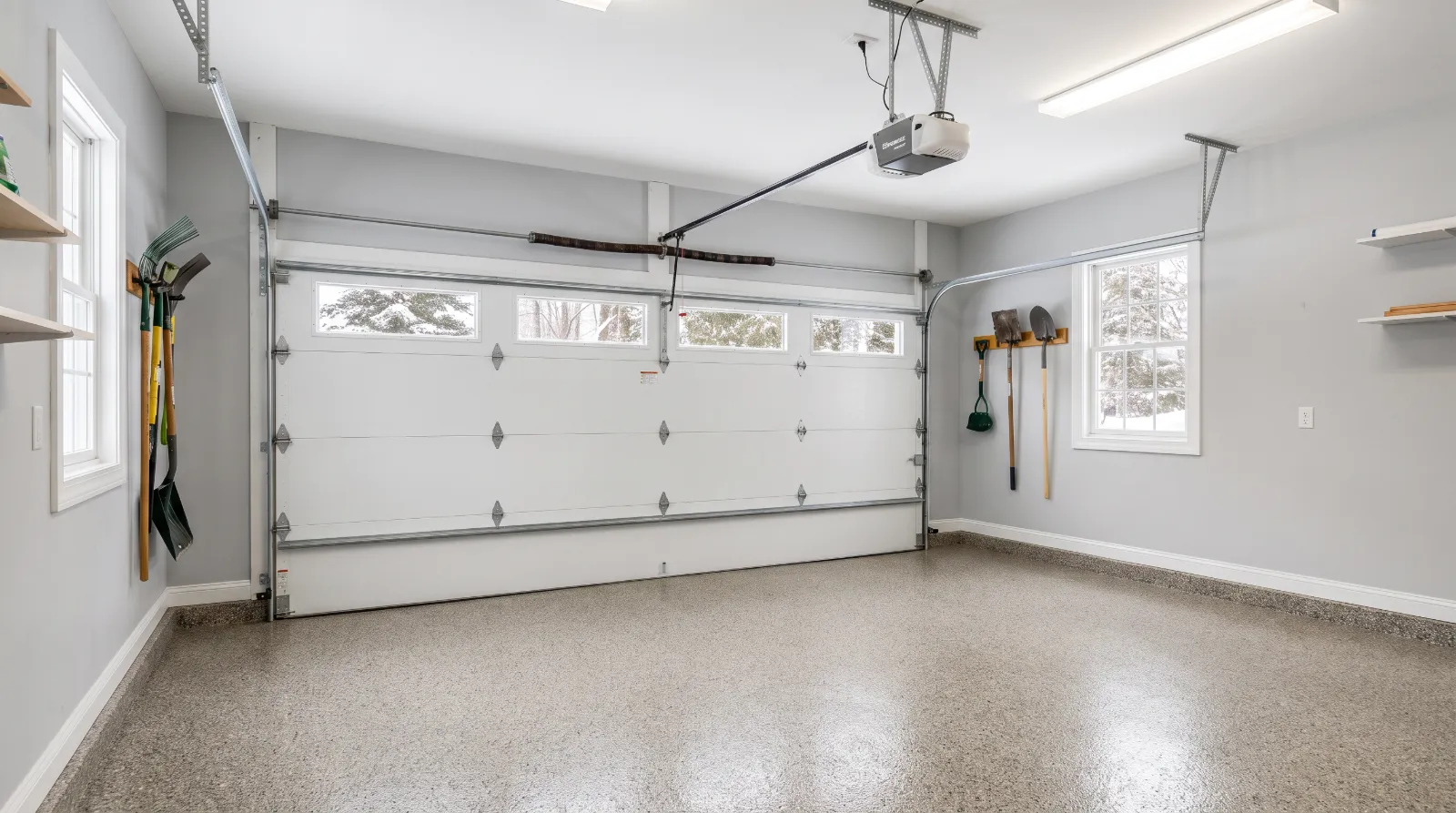
If the opener is also acting up after the spring break, that's common. Openers often strain against a door that suddenly weighs far more than it should. Read about garage door opener repair once the spring is sorted.
Questions people ask
How long do garage door springs last?
Standard springs are commonly rated for around 10,000 open-and-close cycles. A family that uses the garage door four or five times a day gets through that in roughly six or seven years. Higher-cycle springs are available and worth asking about if the door is your main way in and out.
Should both springs be replaced at the same time?
If your door has two springs, they went in together and have done the same work. When one breaks, the other is usually not far behind, so many technicians replace both on the same visit. Ask what they recommend and why.
Can I replace a garage door spring myself?
We don't recommend it. Torsion springs are wound under enough tension to break bones, and extension springs can whip loose when they let go. It's one of the few household repairs where the right tools and training really are the whole job.
My car is stuck inside. Can I open the door just this once?
Don't use the opener and don't force the door up by hand. Tell the company on the phone that your car is inside. A technician can usually get the door moving safely on the same visit as the spring repair.
Why did my spring break in the cold?
Steel gets less forgiving as it gets colder, and a spring that's near the end of its life often gives out on the first hard freeze of the season. Rust from salt and damp air makes it worse by adding friction between the coils.
More in our garage door FAQ.